Golf course irrigation systems depend on large, complex pumping stations to move water across miles of piping, sprinklers, and elevation changes.
Golf course irrigation systems depend on large, complex pumping stations to move water across miles of piping, sprinklers, and elevation changes.
When those systems aren’t operating efficiently, the consequences appear quickly.
Energy costs rise. Equipment wears out faster. Irrigation consistency begins to suffer.
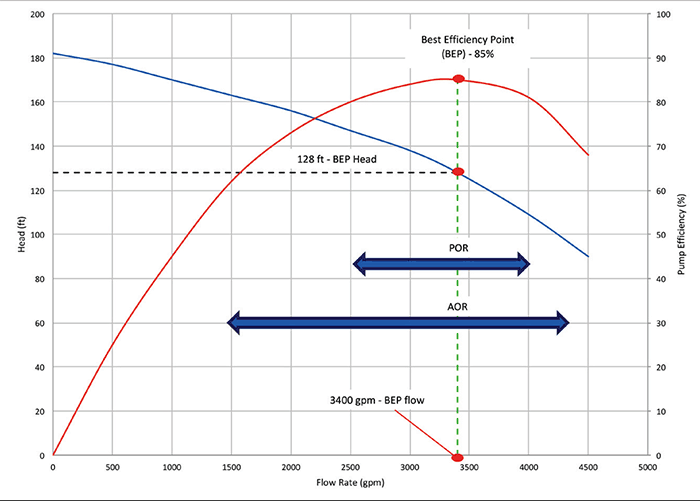
One of the most important factors in avoiding these problems is ensuring the system operates near the Best Efficiency Point (BEP).
Unlike many commercial pumping applications, golf courses experience constantly changing water demand.
Flow requirements shift throughout the day depending on:
Because of these fluctuations, pumps often spend large portions of their operating life outside their optimal efficiency range.
Over time, this creates unnecessary stress on the system.
When pumps operate too far from their Best Efficiency Point, several issues begin to develop.
Energy consumption increases because the pump is no longer converting input power efficiently.
Mechanical stress rises, which leads to:
For golf courses, these problems often show up as:
The system may still function, but it does so less efficiently and less reliably.
Golf course irrigation systems typically represent one of the largest energy consumers on the property.
Even small inefficiencies can translate into significant costs.
When pumps operate near BEP, systems often experience:
These improvements add up over time.
For many facilities, correcting BEP-related issues can deliver meaningful operational savings.
The challenge is that BEP problems are rarely caused by a single component.
They often result from a combination of factors:
Solving these issues requires a system-level evaluation.
That’s where specialized consulting can make a major difference.
At BEP Pump Consultants, we evaluate how irrigation systems behave in real operating conditions—not just how they were designed on paper.
By identifying how closely pumps operate to their Best Efficiency Point, we can help golf courses improve performance, reduce energy costs, and extend the life of critical infrastructure.